Vscan Handheld Ultrasound

CHOOSE YOUR LOCATION

It looks like you are located in: United States.

You are visiting the vscan.rocks website for Europe.
To see content for your specific location, choose the relevant region below.


Go to United States Continue
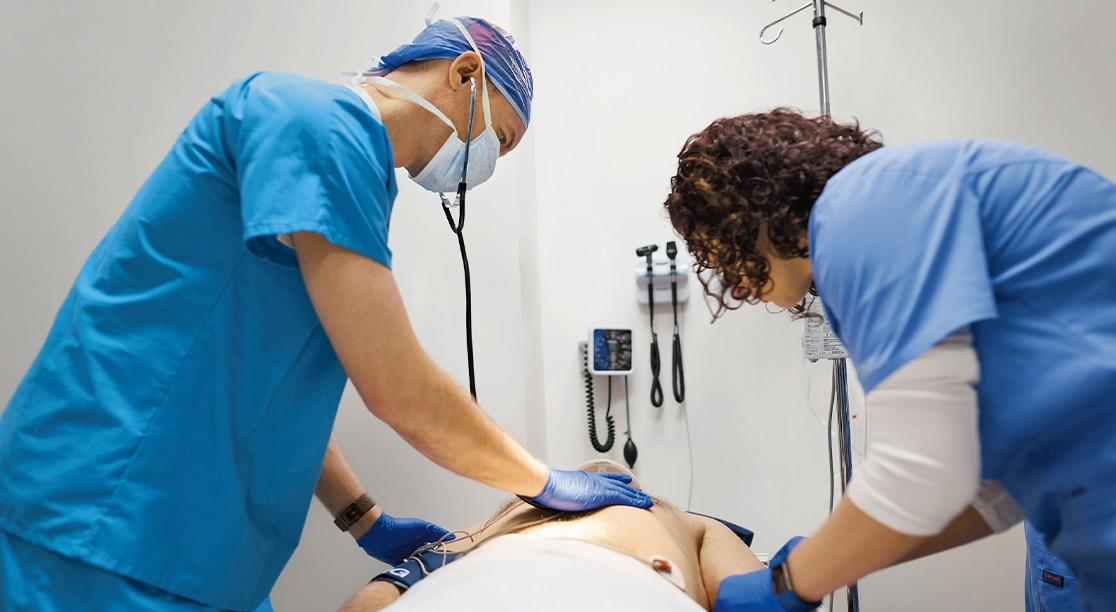
Time is of the essence in the ICU. When it’s easy to quickly see within patients’ bodies, handheld ultrasound helps you to quickly triage patients and make fast clinical decisions by ruling in or out a wide variety of acute conditions for patients.
Clinical Perspectives

How Vscan Air can impact your practice

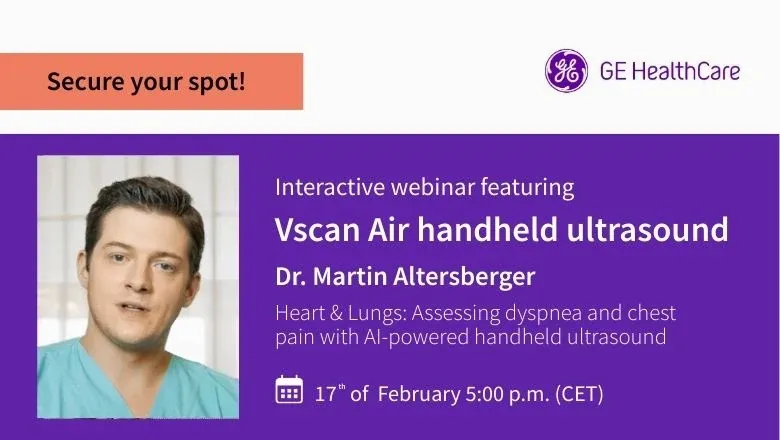
Dr altersberger
quotation mark

It should be used as early as possible to detect severe pathology. We want to find patients with relevant pathology, young or elderly, where we can make a difference and have an impact with early diagnosing and then with early treatment.

Dr. Martin Altersberger
Cardiologist
Steyr, Austria
Watch now
Dr altersberger
quotation mark

(…) I would definitely recommend the Vscan Air. It has no cable in infectious settings. It's optimal to clean. In the ICU setting, it's easy to use. It's light. It's handy. I would definitely recommend this portable device.

Dr. Martin Altersberger
Cardiologist
Steyr, Austria
Watch now
Dr altersberger
quotation mark

In regard to the image quality – to the clarity of the image – I have to say, especially the lung ultrasound preset, I did like a lot. (…) The preset is, in my point of view, just perfect.

Dr. Martin Altersberger
Cardiologist
Steyr, Austria
Watch now
Dr chen
quotation mark

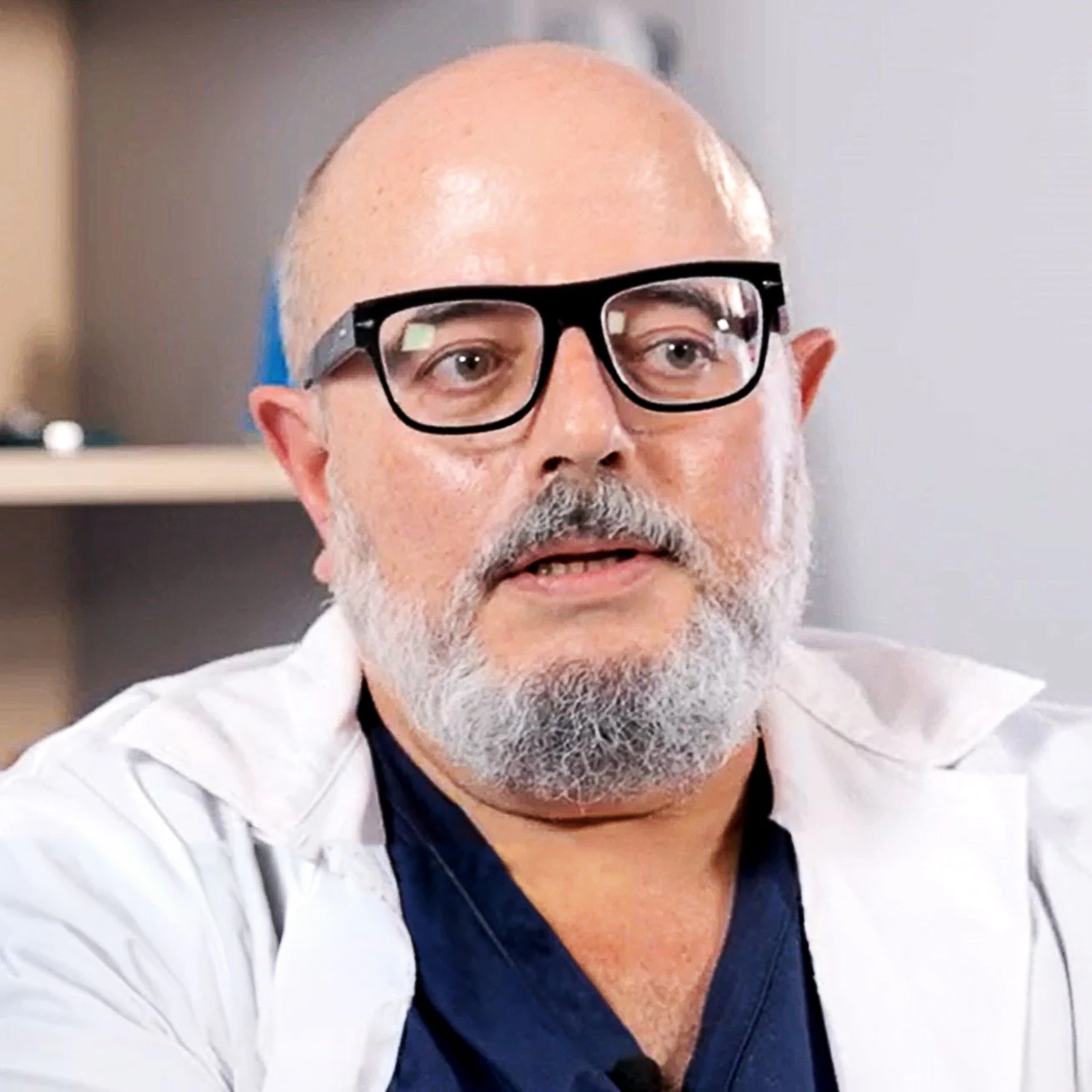
(…) another example of how powerful can be ultrasound in the hands of the emergency physician or the internist physician of the ward.

Dr. Yale Tung Chen
Emergency medicine physician
Hospital Universitario La Paz Madrid, Spain
Testimonial garcia
quotation mark

Clinical ultrasound is considered the fifth pillar of the physical examination. It is no longer an extension of the exam but a fully integrated, multi‑organ assessment tool. Being able to walk into the patient's room with a device that fits in your pocket and provide immediate answers to relevant clinical questions at the bedside adds significant value, avoiding unnecessary transfers and accelerating diagnosis.

Dr. Daniel García Gil
Jefe de Servicio Medicina Interna
Director de la UGC Medicina Interna
Hospital SAS San Carlos de Cádiz
Ultrasound Exams

Speed in the critical moment with Vscan Air

Expedite care when time counts
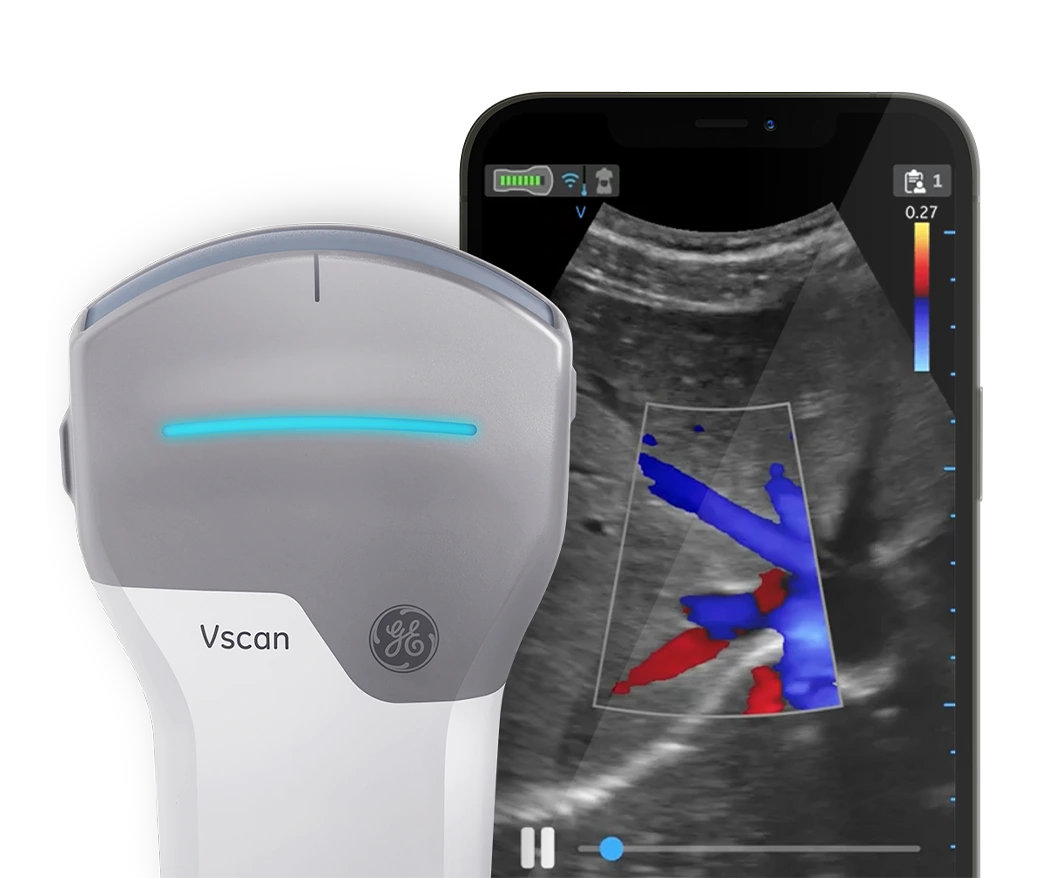
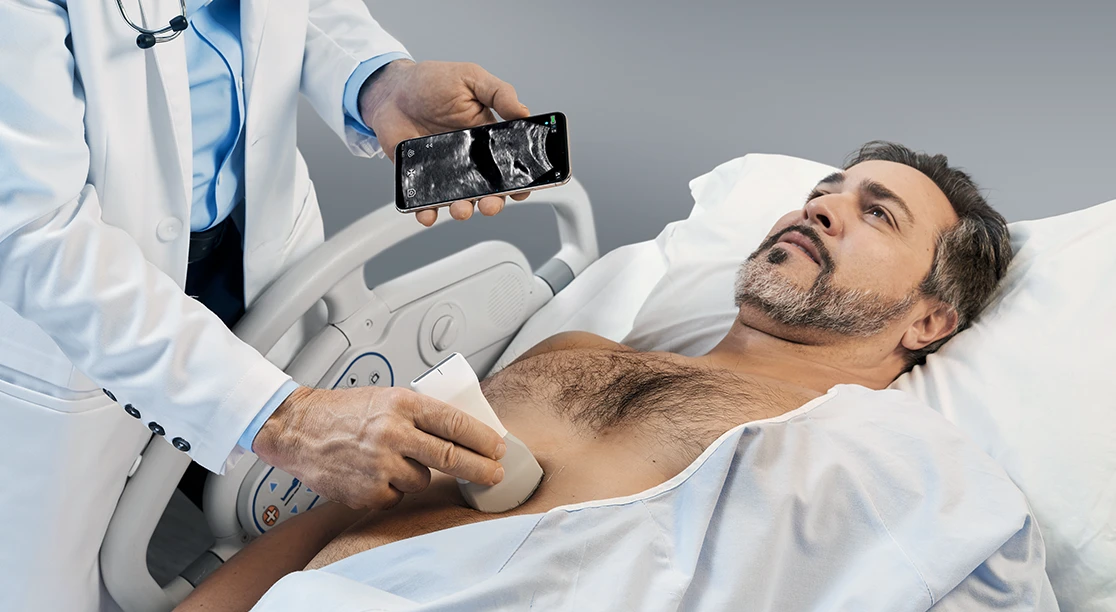
Vscan Air can be an essential time saver in the emergency department or in the ambulance fitting seamlessly into the workflow. The wireless handheld device is effective for many emergency ultrasound situations.
With one diagnostic tool, clinicians can quickly assess patients for a plethora of life-threatening entities and gain clinical insights that help guide their care plans:
  • Lung ultrasound
  • Cardiac and vascular ultrasound
  • Renal ultrasound
  • Abdominal ultrasound
  • Procedural ultrasound
Various exams crop

Simple. Fast. Precise.

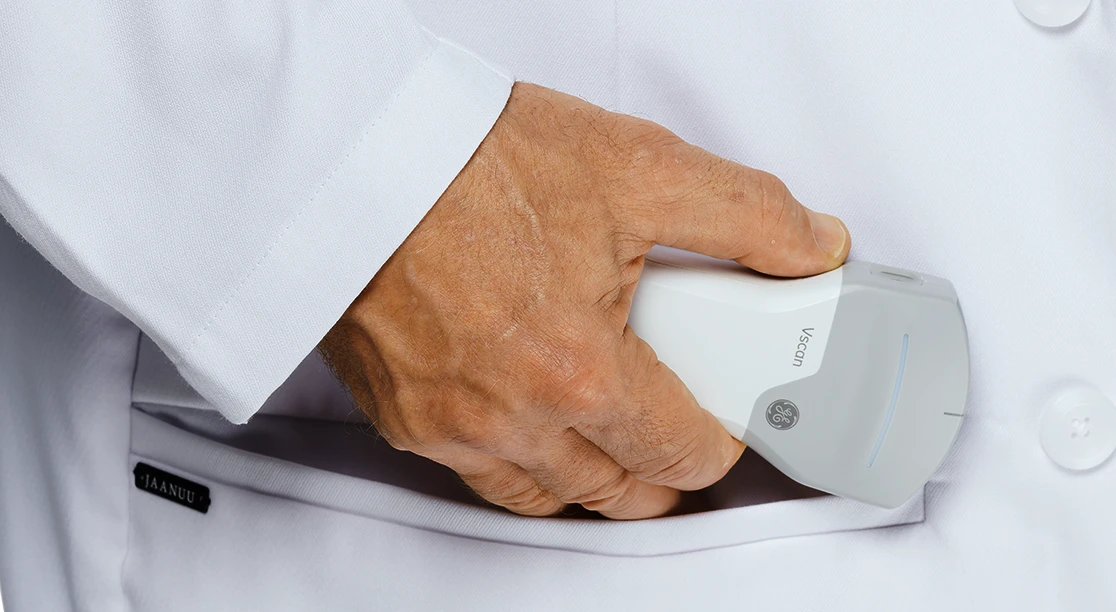
With Vscan Air, you can keep the device in your pocket throughout the day, using it as needed on the spot. The easy and quick access helps you quickly triage patients and make fast clinical decisions1, potentially saving precious time, treating a higher number of patients, and minimizing the need for costly and invasive imaging procedures.
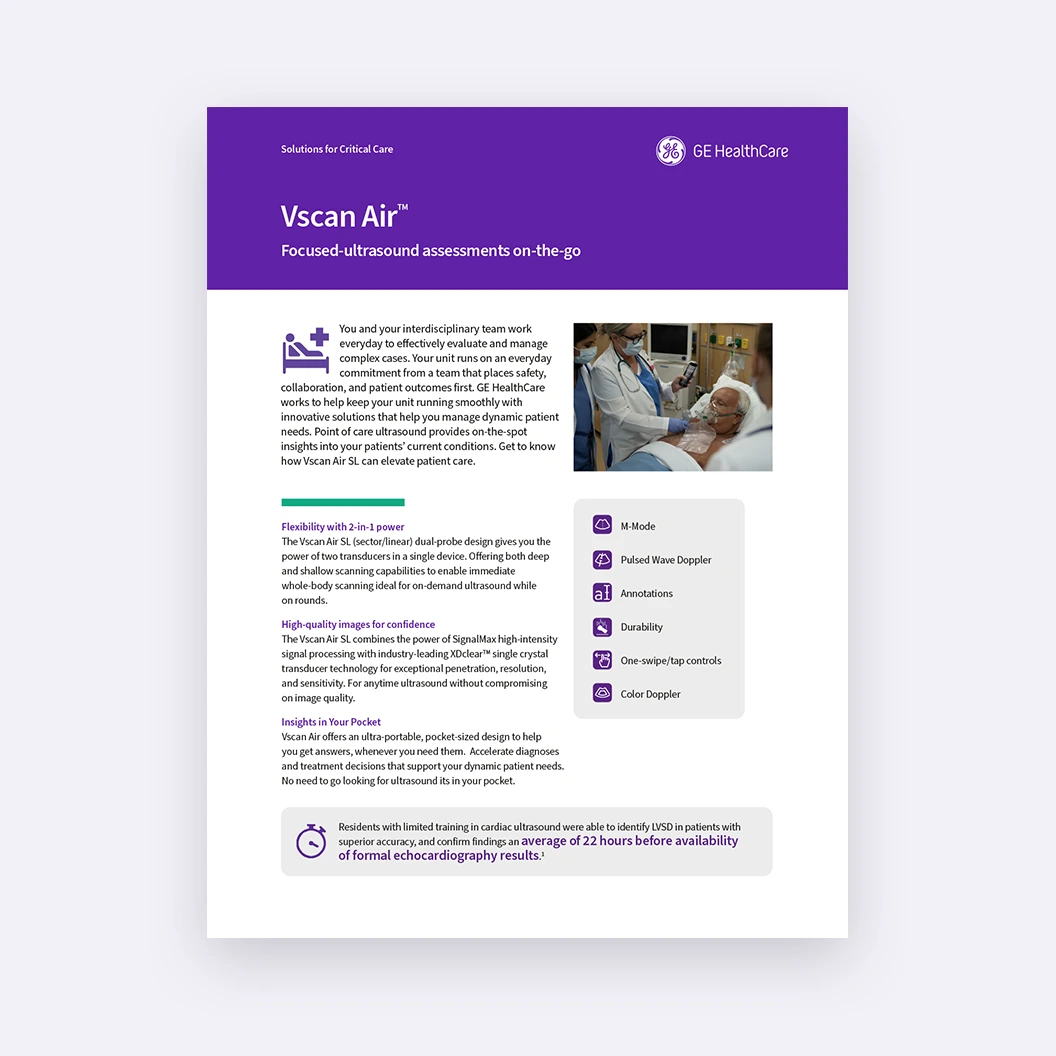
Vscan Air critical care features

What makes Vscan Air a reliable solution for critical care?

Specialty features/increase speed

Increase speed to diagnosis

In major trauma patients, using handheld ultrasound to conduct FAST exams can help save precious time in emergency situations and minimize the need for costly and invasive imaging procedures.
Specialty features/take it anywhere

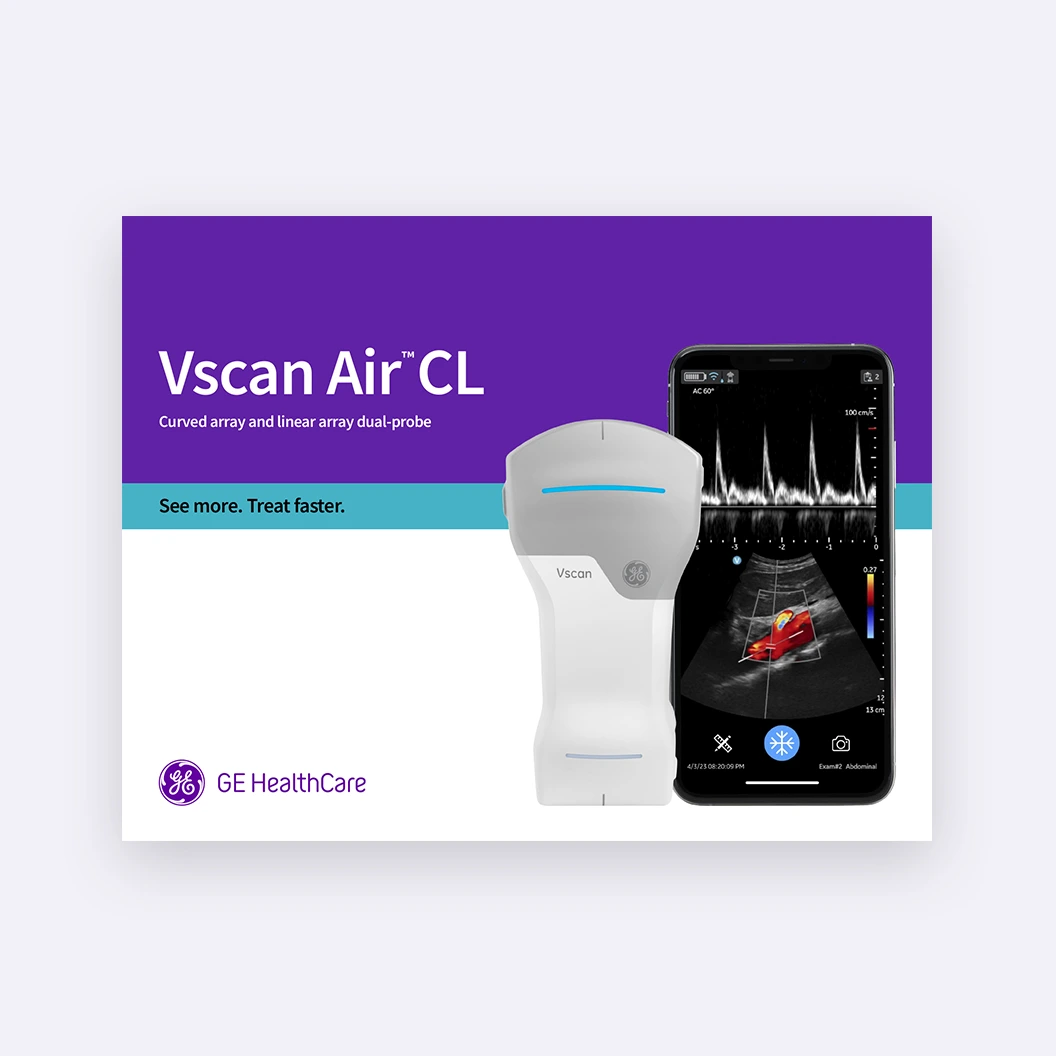
Dual probe system for quick checks and simple procedures

Complete both shallow and deep exams with a simple flip of the 2-sided probe. It’s an indispensable gadget, like the stethoscope, in evaluating trauma and other critical patients.
Specialty features/store share collaborate

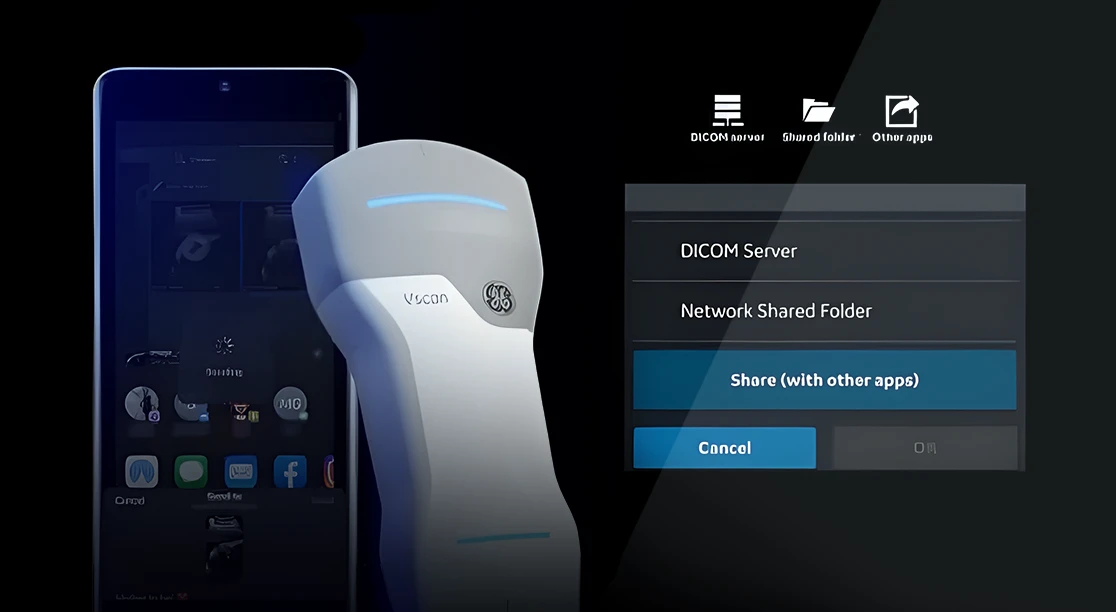
Securely store, share, and collaborate seamlessly.

With a flexible wireless dataflow and data privacy at the forefront, you can confidently store images, share with other applications and collaborate with other care providers.
Specialty features/save time simple operation

By your side. From your first scan to experienced use.

Make the most of your system every day with Vscan Air’s easy-to-use design backed by GE HealthCare’s support and educational tools for ultrasound in critical care.
Products and solutions

Powerful imaging. Powerful connections. It’s in your hands.

Are you ready to
explore Vscan Air?

Experience wireless handheld ultrasound without compromising on portability or image quality.
Learn more
Clinical resources for critical care

Peer-reviewed articles

Explore publications for medical professionals in the field of critical care on various topics related to handheld ultrasound.
FAQs

Vscan Air in critical and intensive care

Which Vscan Air model is better suited for the emergency room and intensive care unit?

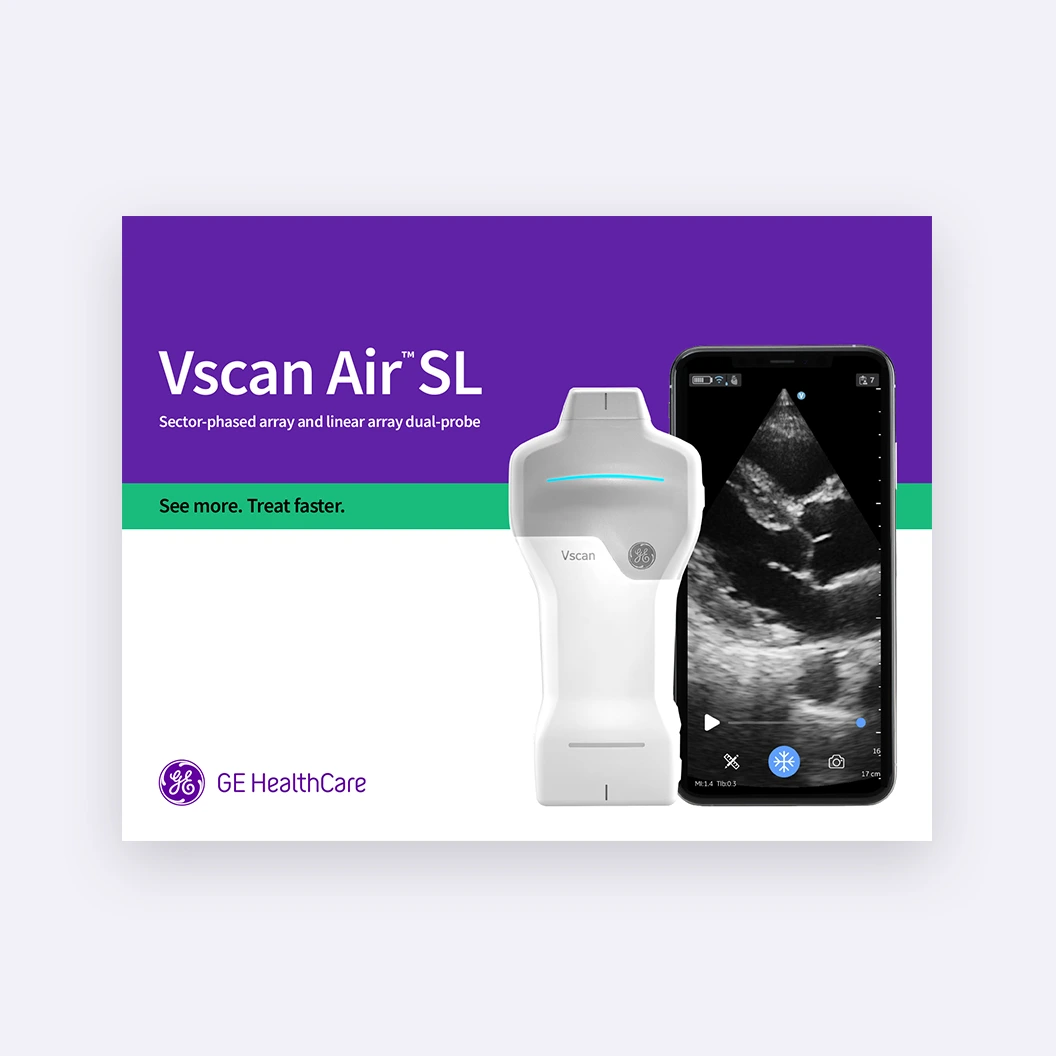
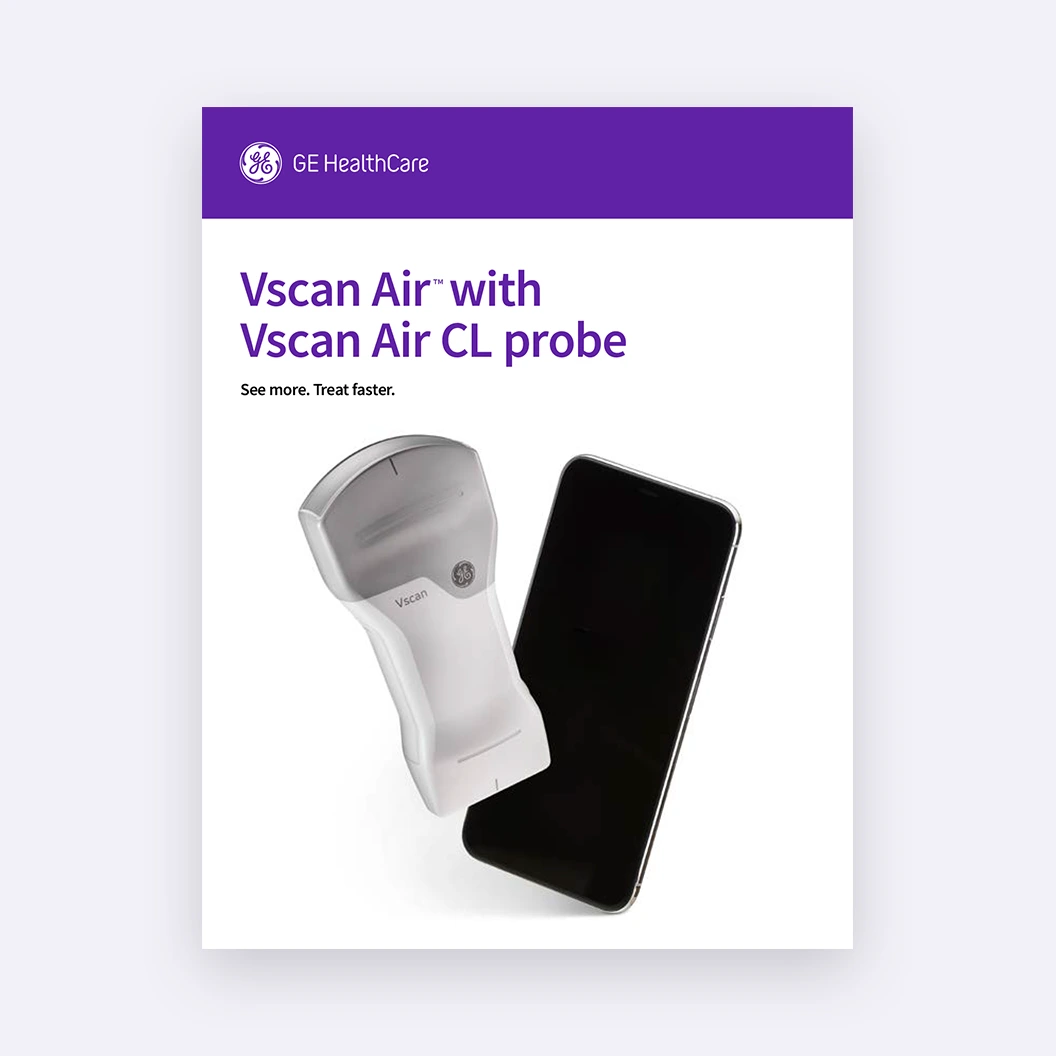
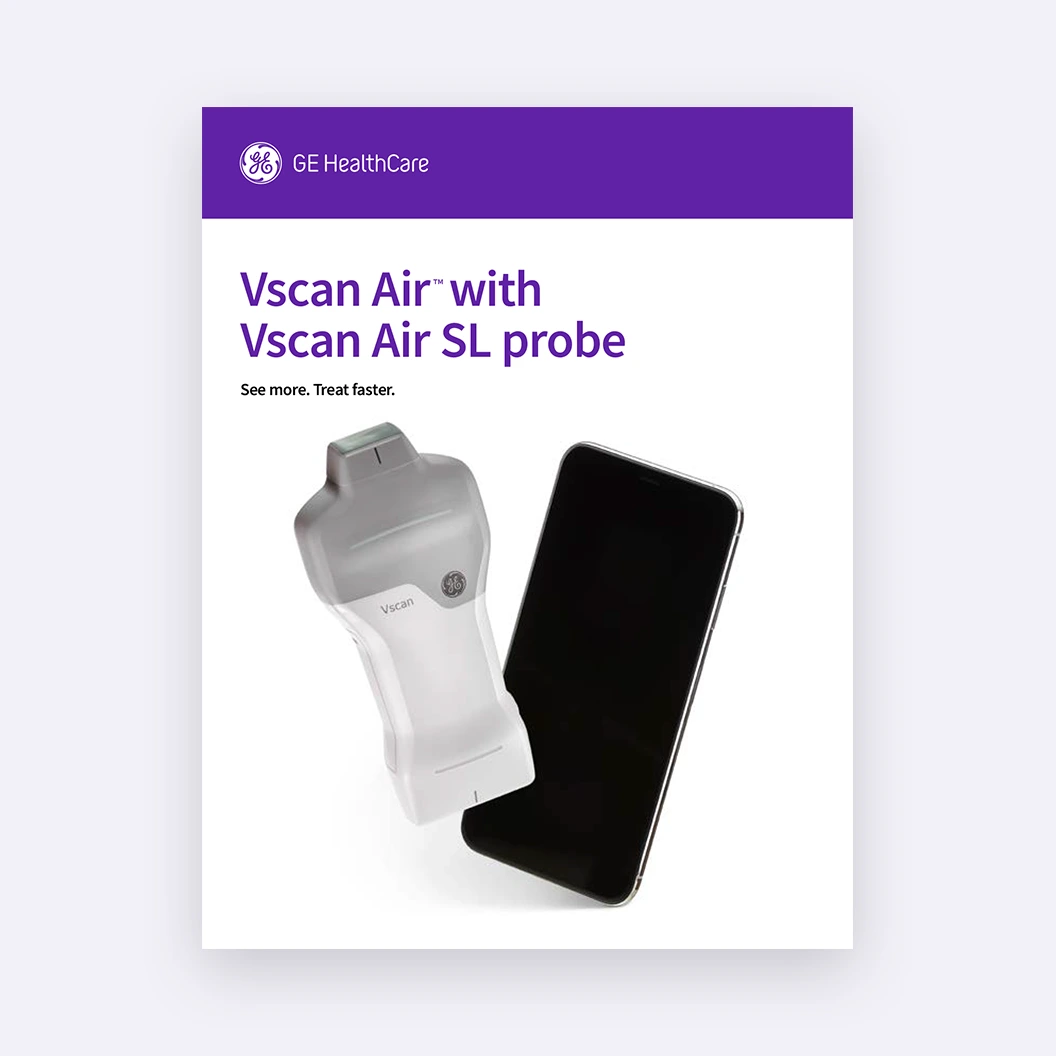
For the emergency room and intensive care unit, the choice depends on the focus: The Vscan Air SL with sector probe and optional Caption AI is particularly suitable for cardiac and pulmonary diagnostics, while the Vscan Air CL with curved probe for abdomen and volume status. Both are drop-resistant, IP67-waterproof and disinfectable. For cardiologically oriented settings, the SL is usually the better choice.

Which mobile ultrasound devices are best suited for the intensive care unit?

Mobile ultrasound devices with a robust design, Doppler functions and good cardiac image quality are suitable for the intensive care unit. The Vscan Air SL offers sector probe, pulsed wave Doppler, M-mode and optional Caption AI for heart and lung assessment. It is drop tested according to military standards, IP67 waterproof and compatible with high-level disinfection – important prerequisites for hygienic continuous use at the ICU.

Is Vscan Air suitable for lung diagnostics in the intensive care unit?

Yes, Vscan Air is suitable for lung diagnostics in the intensive care unit. The linear probe depicts lung findings close to the surface, the sector or curved probe deeper thoracic structures. This allows B-lines, pleural effusions and pneumothorax signs to be assessed at the bedside – helpful in quickly differentiating the causes of dyspnea in ventilated and critically ill patients.

How is ultrasound used in intensive care medicine for ultrasound-guided catheter insertion?

In intensive care medicine, ultrasound is used for real-time guidance of vascular access: the linear probe represents the vein or artery and the needle during the puncture. This increases the initial puncture rate and reduces complications such as accidental arterial puncture. Vscan Air enables this ultrasound-controlled catheter system wirelessly and directly at the bedside, without having to bring in a stationary device.

Does Vscan Air support ultrasound-guided vascular access in the ICU?

Yes, Vscan Air supports ultrasound-guided vascular access. The linear probe (3–12 MHz) displays vessels and puncture needles in real time and facilitates the safe placement of central and peripheral access points in the intensive care unit. The cordless design allows for free handling at the bedside. This increases the rate of initial punctures and reduces complications – available at any time in your coat pocket.

What disinfection and hygiene standards apply to Vscan Air in intensive use?

Vscan Air is compatible with high-level disinfection processes and is fully waterproof according to IP67 protection, which makes it easier to clean in intensive use. The cordless probe design without scratches supports wipe disinfection between patients. Specific disinfectants and procedures are specified in the user manual. This means that the device can be reprocessed in accordance with MRE standards and used hygienically safely at the bedside.

Have a question?
We would love to hear from you.

Contact us
1 Andersen & Dalen - Diagnostic Influence of Routine Point-of-Care Pocket-size Ultrasound Examinations Performed by Medical Residents - J Ultrasound Med. https://www.ncbi.nlm.nih.gov/pubmed/?term=25792578; Filopei & Kory 2014 - Impact of Pocket Ultrasound Use by Internal Medicine House Staff in the Diagnosis of Dyspenea; Maw & Soni 2018 - Inpatient Notes: Why Should Hospitalists Use Point-of-Care Ultrasound? - Annals for Hospitals