
CHOOSE YOUR LOCATION
It looks like you are located in: United States.
You are visiting the vscan.rocks website for Europe.
To see content for your specific location, choose the relevant region below.
It looks like you are located in: United States.
You are visiting the vscan.rocks website for Europe.
To see content for your specific location, choose the relevant region below.


 Language
 Especialidades Clínicas Produtos e Soluções Educação Idioma
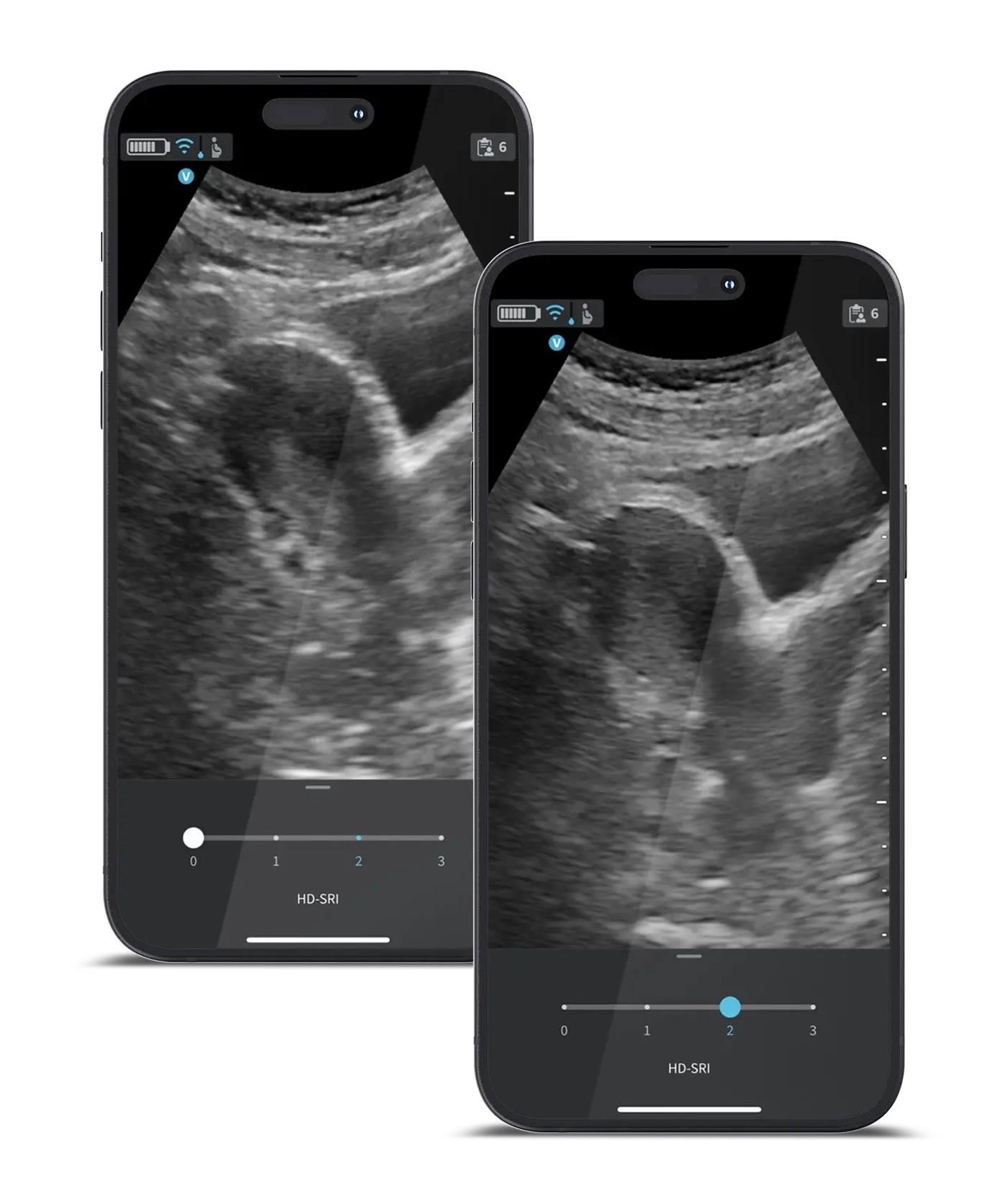
Mobile handheld ultrasound devices have become increasingly popular for point-of-care ultrasound due to their many advantages over traditional ultrasound machines:
Handheld ultrasound is suitable for a wide range of care areas, including emergency medicine, critical care, cardiology, urology, primary care, vascular, obstetrics and gynecology, and musculoskeletal imaging. Its portability, cost-effectiveness, ease of use, and real-time imaging capabilities make it an ideal tool for point-of-care ultrasound in these care areas. Additionally, handheld ultrasound is useful in remote and low-resource settings where access to traditional ultrasound machines may be limited.
Handheld ultrasound devices typically have wireless connectivity options such as Wi-Fi, Bluetooth, and mobile network connectivity, allowing them to share and transfer images and data to other devices or cloud-based storage. Some devices may also have USB connectivity options for transferring data to a computer.
 Belgium (EN)
Belgique (FR)
Belgium (EN)
Belgique (FR)
 Brasil (PT)
 Bulgaria (EN)
 Croatia (EN)
 Czechia (EN)
 Denmark (EN)
 Deutschland (DE)
 España (ES)
 Estonia (EN)
 Finland (EN)
 France (FR)
 Greece (EN)
 Hungary (EN)
 Ireland (EN)
 Italia (IT)
 Latvia (EN)
 Lithuania (EN)
 Luxembourg (EN)
 Malaysia (EN)
 Netherlands (EN)
 Norway (EN)
 Österreich (DE)
 Poland (EN)
 Portugal (EN)
 Romania (EN)
 Slovakia (EN)
 Slovenia (EN)
 Sweden (EN)
 Schweiz (DE)
Suisse (FR)
Schweiz (DE)
Suisse (FR)
 UK (EN)

 ()
()